Golf Swing Guide: How to Hit a Golf Shot Step by Step
A consistent golf swing starts with a repeatable setup, controlled tempo, and good balance. Aim the clubface, settle into a comfortable stance, and use a speed you can manage. This Alegolf Vietnam guide explains the swing from address to finish and offers three drills to practice contact, rhythm, and control.
What makes a golf swing repeatable?
Start by looking for a pattern in your shots. If you can hit several balls from the same setup and see where they start, how they curve, and where they strike the clubface, you have useful feedback. One shot may surprise you. A group of five or six can show you whether the same miss keeps coming back.
A short or mid-iron is a practical club to start with. Pick one target and make a few swings at a comfortable speed. If contact improves when you shorten the motion, stay there for a few more shots. Build toward a longer swing once you can find the middle of the clubface more often. This gives you a way to judge progress before adding speed or changing clubs.
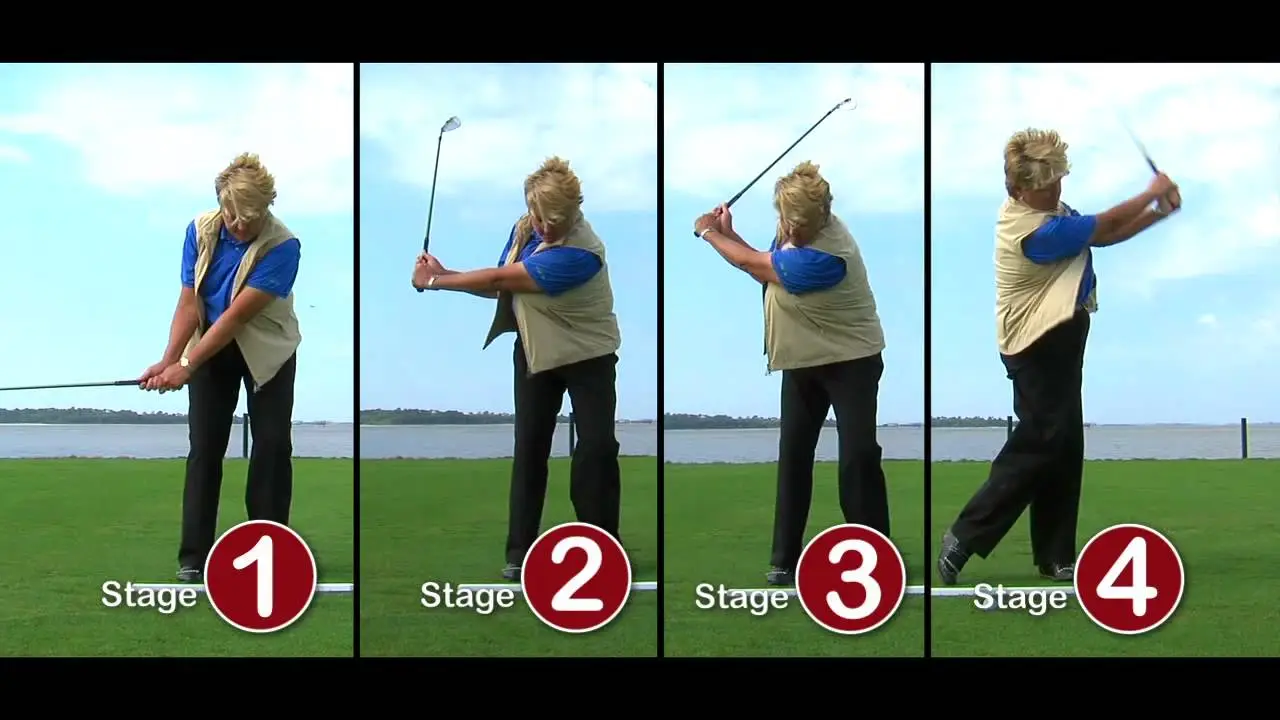
How to swing a golf club in five steps
1. Set your grip, aim, and posture
Aim the clubface toward the line you want the ball to start on, then take your stance. If you find it hard to aim at a distant flag, choose a mark on the ground a short way ahead of the ball. Use it as a reference while you set the clubface and settle your feet.
For a basic mid-iron shot, start with the ball near the middle of your stance. Bend comfortably from the hips, soften your knees, and let your arms hang. Grip the club securely while keeping your forearms relaxed. For more details on proper hand positioning and grip pressure, refer to our golf grip guide. If you feel as though you are reaching for the ball, adjust how far you stand from it and make a rehearsal swing.
2. Turn into a comfortable backswing
Let your chest and arms start moving the club away together. As you swing back, allow your hips to turn and feel some pressure move toward your trail foot. Your trail foot is your right foot if you play right-handed and your left foot if you play left-handed. Check that you can complete the turn without losing your balance.
Use a backswing length you can repeat. If your swing feels rushed near the top, try a shorter motion for the next few balls. A shorter backswing may help you find better contact while you learn how much turn feels comfortable.
3. Change direction smoothly
The transition is the moment you move from the backswing into the downswing. A useful practice feel is to let pressure begin moving toward your lead foot as you change direction, then keep turning through the shot. Try it at half speed first so you can notice whether you are rushing as the club starts down.
If your best shots tend to come when you swing smoothly, use that pace for a full set of five balls. Compare where they strike the face and how closely they group. That pattern gives you a better basis for adding speed than one shot that travels farther.
4. Focus on contact at impact
For a standard iron shot from short grass, aim to strike the ball before brushing the turf on the target side. On grass, check where the club first disturbed the ground. If you practice on a mat, pay attention to sound and feel, since the club can skid or bounce off the mat before reaching the ball.
Driver contact works differently because the ball is teed up. Begin with the ball farther forward than you would for a mid-iron, around the inside of your lead heel as a starting point. Check where you strike the driver face and adjust the ball position or tee height one at a time. That helps you see which change affects the strike.
5. Finish in balance
Let your chest and hips continue turning after impact. At a balanced finish, most of your pressure will typically be on your lead side. See whether you can hold the finish long enough to watch where the ball starts and how it curves.
If you often have to step forward or sideways to recover, try a slightly slower swing. The finish gives you quick feedback on balance, even when a shot happens to end up near the target. Once you can hold it comfortably, build speed in small steps.
How to diagnose common golf swing misses
Use the same club and target for a few shots before making a change. A miss can have several causes, so treat each check as a starting point.
|
What you notice |
What to check first |
What to try |
|
Fat shots |
The club contacts the ground behind the ball. |
Make shorter swings and see where the club first brushes the grass. |
|
Thin shots |
The strike feels low on the face and the ball often flies lower than expected. |
Check ball position and rehearse brushing the ground near the ball. |
|
Shots that start off line |
The ball starts to one side of your intended line. |
Check where the clubface points at address, then hit a few more shots to see whether the pattern repeats. |
|
Shots that curve sharply |
The ball starts in one direction and bends noticeably in flight. |
Note the starting direction, the curve, and the strike location before changing your grip or swing path. |
|
An unsteady finish |
You step or shift abruptly after impact. |
Reduce swing length or speed and see whether you can hold your finish. |
If you notice more than one issue, start with the one you can observe most clearly. For example, if most shots strike the ground behind the ball, spend a few swings on contact before you work on curvature. Once the strike becomes more predictable, your ball flight may be easier to interpret.
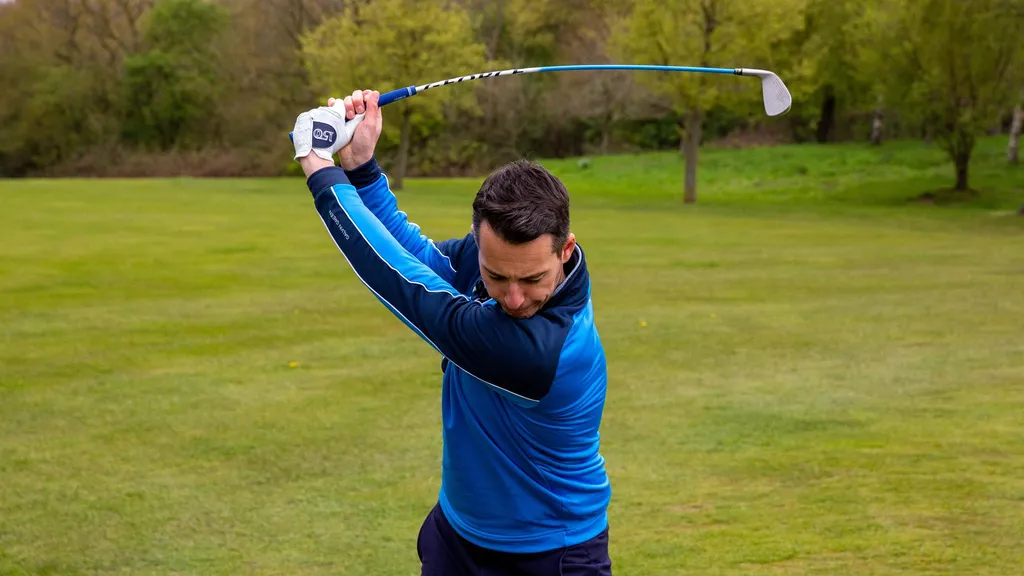
Three golf swing drills to try on the range
1. The half-swing contact drill
Take a short or mid-iron and choose a target well within reach. Swing back until your hands are roughly waist high, then swing through at a comfortable speed. Hit five balls and note which ones you strike cleanly. If you are on grass, look at where the club touches down relative to the ball.
Once several shots feel solid, let the backswing get a little longer. If the strike becomes less predictable, return to the shorter swing for a few shots. Use the longest motion you can control that day as your starting point for the next practice session.
2. The narrow-stance balance drill
Bring your feet closer together than usual and make a few slow rehearsal swings with a short iron. Notice how much effort you can use while staying centered. If the motion feels steady, hit a few easy shots. Then return to your normal stance and try to keep the same rhythm.
This drill can be useful if you tend to lunge toward the ball or lose your footing when you swing harder. Judge it by how smoothly you move and whether you can finish comfortably. Distance matters less during the drill.
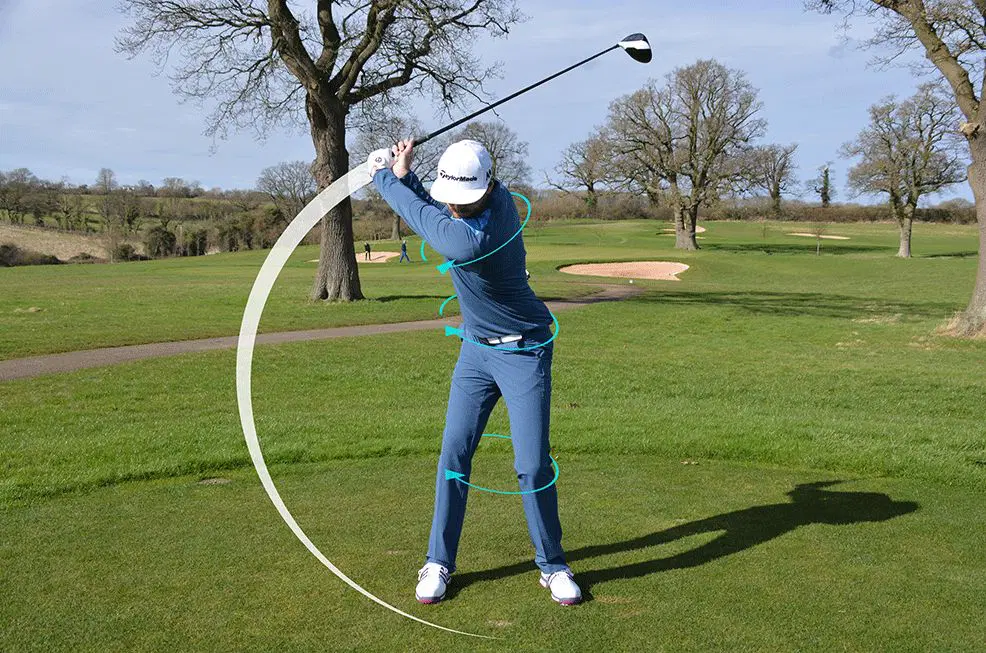
3. The one-ball target drill
Choose a target, go through your setup, and hit one ball. Then change the target or club for the next shot. Give yourself a few seconds to decide where you want the ball to start and what you will do if your usual miss shows up. This makes practice feel more like a round, where the lie, target, and club often change from one shot to the next.
After six shots, note which part of your routine held up. If you lost track of your aim when switching targets, work on your setup. If your contact changed every time you switched clubs, practice alternating between two clubs at an easier speed. You can also incorporate PGA golf swing drills into your training routine to improve swing consistency and build better control with different clubs.
FAQ About the Golf Swing
How do you make a basic golf swing?
Aim the clubface, take a comfortable stance, and turn into a controlled backswing. Change direction smoothly, swing through the ball, and finish in balance.
What should a beginner practice first?
Start with grip, alignment, and posture, then practice short-iron half swings. Focus on consistent contact before adding swing length or speed.
Why do golfers hit fat or thin shots?
Fat shots occur when the club strikes the ground before the ball; thin shots involve contact too low on the clubface. Both can have several causes, so check setup, ball position, and where the club meets the ground before making changes.
How can you improve golf swing tempo?
Practice shorter swings at a comfortable pace, keeping the change from backswing to downswing smooth. Gradually lengthen the motion while maintaining the same sense of rhythm and balance.
How do you know whether a swing change is working?
Compare contact, starting direction, shot dispersion, and balance using the same club and target. Look for improvement across several practice sessions rather than judging the change by one good shot.
Take your golf swing from the range to the course
Before your next round, choose one swing thought you can use on the first tee, such as a smooth start or a balanced finish. On the course, pick a target that gives your usual shot enough room. If you are planning a trip with golfers of different skill levels, our guide to planning a golf holiday in Vietnam can help you compare destinations. You can also explore our Vietnam golf map to discover courses across the country. Share your dates, group size, and playing levels with Alegolf Vietnam so we can suggest courses that suit your group.
Destination

Hanoi Hanoi Golf Holidays

Ha Long Ha Long Golf Holidays

Da Lat Da Lat Golf Holidays

Nha Trang Nha Trang Golf Holidays

Da Nang Da Nang Golf Holidays

Ninh Binh Ninh Binh Golf Holidays

Ho Chi Minh Ho Chi Minh Golf Holidays

Phu Quoc Phu Quoc Golf Holidays
Golf Deal
Legend Danang Golf Resort: Course Guide & Tee TimesTopics of Many Interests
ALEGOLF TOUR AT ITE HCMC 2026 MEET US AT BOOTH 76 Things to Do in Ho Chi Minh City: Sights, Food & Golf Vietnam Golf Packages | All-Inclusive Golf Holidays & Tours Professional Golf Tour Operators: Designing the Perfect Vietnam Experience Corporate Events Golf in Vietnam | Professional Golf DMC Ultimate Guide to Planning Perfect Golf Holidays in Vietnam Dragon Golf Links - Unique Golf Course on the Sea FLC Ha Long Golf Club: Transcendent Moments Amidst a World Natural Wonder FLC Golf Links Quy Nhon - A Remarkable Golfing Destination Along the Central Coast FLC Sam Son Golf Links - A Great Destination for Golfers!New Posts



Comment