Golf Grip Guide: How to Hold a Club and Grip a Driver
To grip a golf club, aim the clubface, place the handle across your lead-hand fingers, and add your trail hand below. Keep both hands connected and hold firmly without excessive tension. This Alegolf Vietnam guide explains hand placement, common grip styles, and how to apply these fundamentals to your driver.
What is a golf grip?
A golf grip can mean the way you hold the club or the rubber or synthetic covering on the handle. Both affect how the club feels, so start by identifying what you want to change. If the club shifts in your hands during a swing, check whether the handle or glove is damp and whether the grip surface is worn. If the handle feels secure but your hands keep returning to different positions, work on how you set up.
A repeatable grip gives you a starting point for practice. Suppose your first few shots go in different directions. If you grip the club differently each time, it becomes harder to tell whether hand position, alignment, or contact contributed to the result. Use the same setup for several shots before deciding which part to adjust.
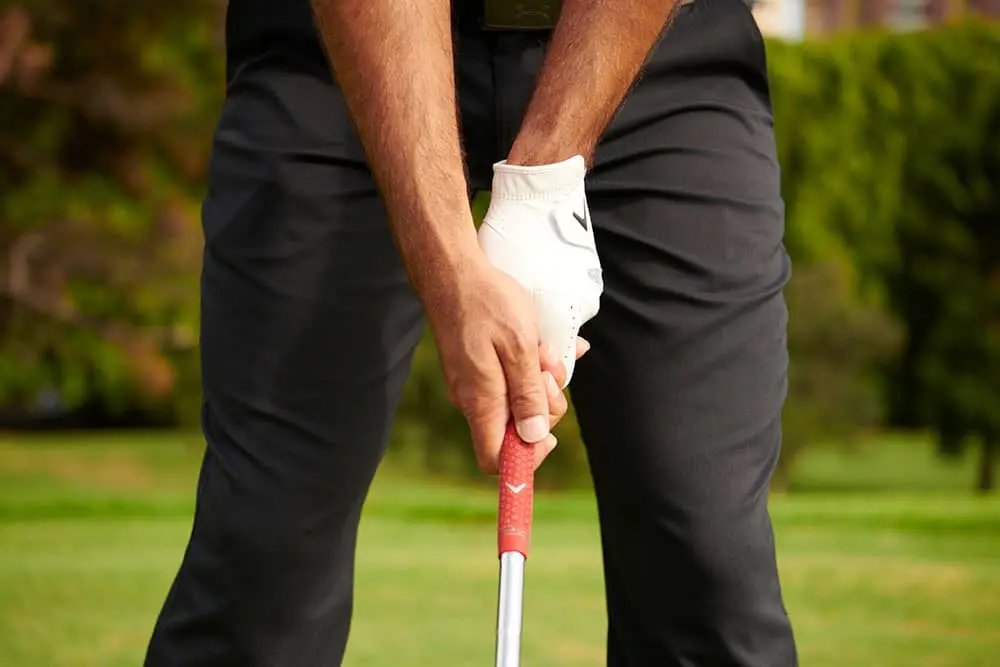
How to hold a golf club in five steps
- Aim the clubface: Set it behind the ball, facing your intended starting line.
- Place your lead hand: Position the handle diagonally across your fingers, with the heel pad supporting it from above.
- Add your trail hand: Place it below the lead hand and connect your hands comfortably.
- Check hand position: Use the visible lead-hand knuckles and thumb–index V-shapes as reference points.
- Check grip pressure: Make a short rehearsal swing, keeping the club secure without excessive forearm tension.
Overlap, interlock, or ten-finger grip?
These three styles describe how the hands connect. You can test them while keeping the clubface aimed at the same target and using the same club.
|
Grip style |
How the hands connect |
When to try it |
|
Overlap |
The trail pinky rests in the space between the lead index and middle fingers. |
Try it if your hands fit together comfortably with the pinky resting on top. |
|
Interlock |
The trail pinky and lead index finger hook together. |
Try it if you prefer a more connected feel and can link the fingers comfortably. |
|
Ten-finger |
All ten fingers contact the handle, with the hands sitting next to each other. |
Try it if linking or overlapping the fingers feels awkward. |
Start with a mid-iron and hit a few half shots with each style. Notice whether you can place your hands the same way each time, whether the club stays secure, and how often you find the center of the face. Then test your preferred option at normal speed. A grip that feels comfortable on a short swing may feel different when you swing a longer club.

Neutral, strong, and weak golf grips
These terms describe how the hands are turned around the handle. A neutral grip gives you a useful reference when you are learning to hold the club. In a stronger grip, the hands are turned more toward the trail side. For a right-handed golfer, this can make more lead-hand knuckles visible at address. In a weaker grip, the hands are turned more toward the lead side, so fewer knuckles may show.
If you experiment with hand rotation, make a small change and hit several balls to the same target. Observe where they start, how they curve, and where they contact the face. A grip change can affect how you deliver the club, but ball flight also depends on the relationship between the clubface and swing path, as well as where you strike the ball. If the same miss keeps showing up, a lesson can help you decide whether the grip is the right thing to change.
[Suggested image: Neutral, strong and weak hand positions viewed from above
Alt: Comparison of neutral, strong and weak golf grip positions
Caption: Hand rotation changes how many lead-hand knuckles are visible at address.]
How to grip a golf driver
Start with the hand position you can repeat with an iron. Set the driver behind the teed ball, aim the face, and check that your hands settle on the handle without turning it. Because the driver has a longer shaft and you may swing it faster, notice whether you squeeze harder as you get ready to hit. Try a few smooth swings at a speed where the handle feels secure and your arms can move freely.
If your driver repeatedly curves right and you play right-handed, check the face at address and look at where you’re making contact before rotating your hands. A strike toward the heel can contribute to rightward curve with a driver. Make one change at a time so you can tell whether a different grip actually helps. Compare several shots at a similar speed and pay attention to the pattern across the group.
You can also try holding the driver slightly lower on the handle for a few balls. This shortens the club’s effective playing length and may make the center easier to find for some golfers. Compare the quality of contact, the spread of your shots, and the distance you carry the ball. Those results can help you decide whether to use that setup on a tighter tee shot.
How to choose and care for the grip on your club
Grip size affects how the handle feels in your fingers. If the grip feels too thin and you squeeze to steady it, try a larger size on one club. If your fingers feel stretched around the handle, compare it with a smaller option. Hand measurements can narrow your choices, and a few practice swings can show whether you prefer the feel. Testing one club first is a practical way to decide before replacing a whole set.
If you play in humid conditions or get caught in a shower, wipe the handle with a dry towel and check whether your glove is damp. A grip that feels slippery when wet may feel secure after drying. If it still slips when clean and dry, or you see smooth wear patches, hardening, or cracks, consider replacing it. Check the clubs you use most often first, since their grips may wear sooner than the rest of the set. When exploring Vietnam golf courses, make sure your clubs are well maintained to enjoy consistent performance across different playing conditions.
How to put on a new golf grip
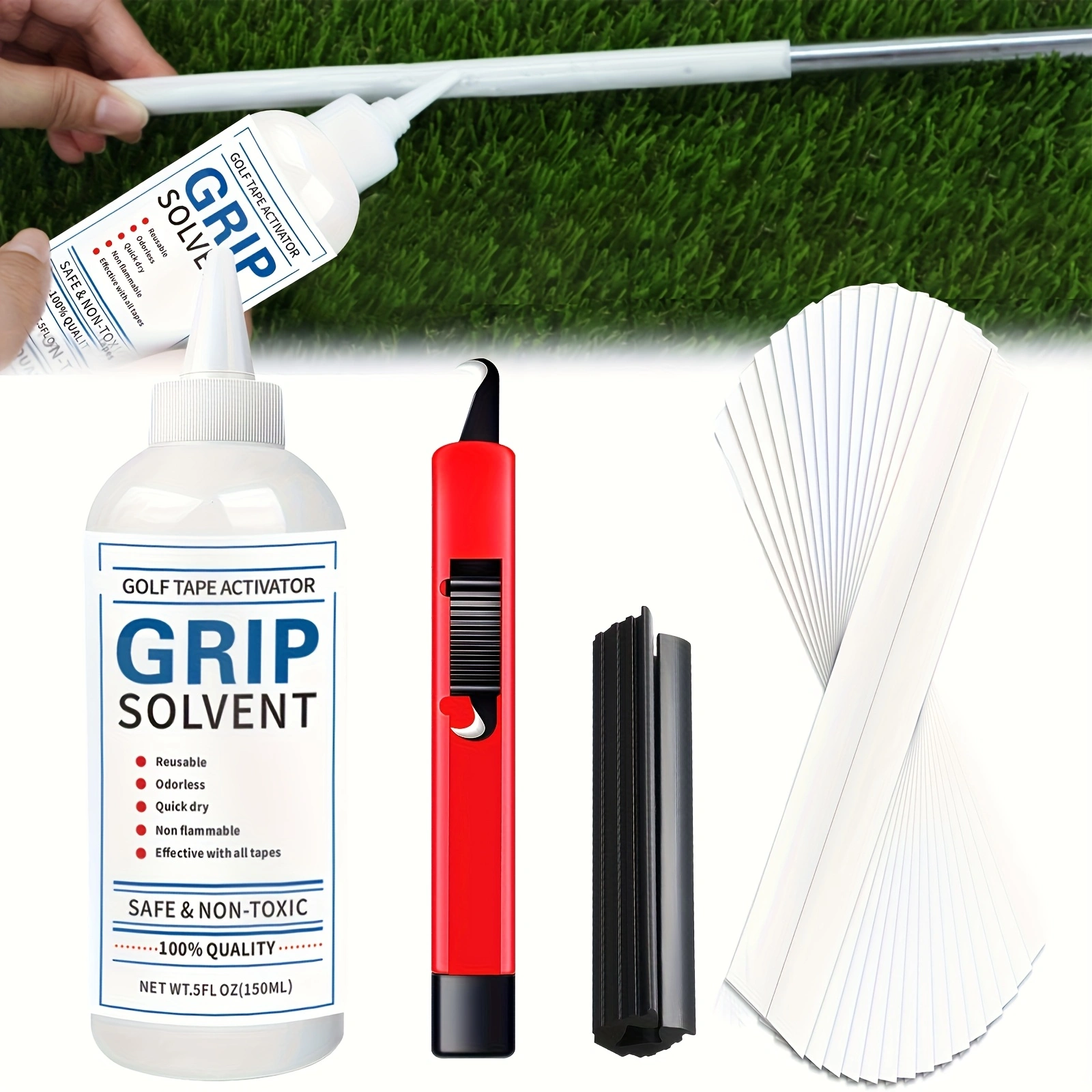
For a standard tape-and-solvent installation, you’ll need a compatible grip, double-sided grip tape, grip solvent, and suitable tools to remove the old grip. Check the instructions for your grip model and shaft first. If you’re replacing a grip on a graphite shaft and haven’t done it before, a club technician can help you avoid scoring the shaft during removal.
- Remove the old grip and tape. Secure the club in a padded clamp if you have one. Remove the worn grip and clear the old tape and residue from the handle area.
- Apply new grip tape. Cover the handle area as directed for the grip model and smooth out any wrinkles. Follow the manufacturer’s instructions for covering the end of the shaft.
- Wet the tape and the inside of the grip. Use the recommended grip solvent and catch the excess in a tray. Follow the solvent label for ventilation and handling.
- Slide the new grip into place. Push it fully onto the shaft and align any marks or raised ridge with the clubface as directed.
- Allow time for the grip to dry. Follow the stated drying time before swinging the club. Golf Pride recommends at least four hours for its standard tape-and-solvent method.
A simple range drill for a more consistent grip
Choose a mid-iron and one target. Before each shot, aim the face, place the lead hand, then add the trail hand. Hit five half shots and note how the handle feels and where the ball starts. If you make an adjustment, change one thing for the next five shots. For example, keep the same finger connection and test a small change in grip pressure.
Then repeat the setup with your driver. Give yourself a clear target and swing at a comfortable speed. When practising golf in Vietnam, judge your grip across several shots by asking whether it felt secure, whether contact became more consistent, and whether you could recreate the hand position without looking down for too long. Keep the setup you can repeat comfortably when you move from the range to the course. If you plan your golf holiday in Vietnam, use these practice sessions to build confidence before playing at different courses.
FAQ About Golf Grip
How do you hold a golf club correctly?
Aim the clubface, place the handle across your lead-hand fingers, and add your trail hand below. Keep both hands connected and hold the club securely without excessive forearm tension.
How do you install a new golf grip?
Remove the old grip and tape, apply fresh grip tape and the recommended solvent, then slide the new grip fully onto the shaft. Align it and allow it to dry according to the manufacturer’s instructions before use.
Should you grip a driver differently from an iron?
Start with the same hand placement and grip style you use for your irons. Keep the club secure without squeezing harder simply because the driver is longer.
Can changing your grip fix a driver slice?
A grip adjustment may help, but a slice can also involve clubface angle, swing path, and off-center contact. Check your setup and strike pattern before changing hand position.
Should you grip down on your driver for more control?
Gripping slightly lower on the handle may improve control and contact for some golfers. Compare shot dispersion and carry distance with your usual grip to see whether the trade-off suits you.
Take your grip practice onto the course
Before your next round, use the same hand setup for a few warm-up shots with an iron and your driver. If you’re choosing where to play, our guide to planning a golf holiday in Vietnam covers destinations and itinerary options. Share your travel dates, group size, and playing levels with Alegolf Vietnam so we can suggest courses that suit your group.
Destination

Hanoi Hanoi Golf Holidays

Ha Long Ha Long Golf Holidays

Da Lat Da Lat Golf Holidays

Nha Trang Nha Trang Golf Holidays

Da Nang Da Nang Golf Holidays

Ninh Binh Ninh Binh Golf Holidays

Ho Chi Minh Ho Chi Minh Golf Holidays

Phu Quoc Phu Quoc Golf Holidays
Golf Deal
Legend Danang Golf Resort: Course Guide & Tee TimesTopics of Many Interests
ALEGOLF TOUR AT ITE HCMC 2026 MEET US AT BOOTH 76 Things to Do in Ho Chi Minh City: Sights, Food & Golf Vietnam Golf Packages | All-Inclusive Golf Holidays & Tours Professional Golf Tour Operators: Designing the Perfect Vietnam Experience Corporate Events Golf in Vietnam | Professional Golf DMC Ultimate Guide to Planning Perfect Golf Holidays in Vietnam Dragon Golf Links - Unique Golf Course on the Sea FLC Ha Long Golf Club: Transcendent Moments Amidst a World Natural Wonder FLC Golf Links Quy Nhon - A Remarkable Golfing Destination Along the Central Coast FLC Sam Son Golf Links - A Great Destination for Golfers!New Posts



Comment