Golf Backswing Tips for Better Rotation and More Consistent Contact
Start with a balanced setup, move your arms and chest together in the takeaway, and turn only as far as you can comfortably control. These golf backswing tips show you how to test those changes with three drills and judge your progress by strike quality and starting direction.

What Should a Good Backswing Achieve?
The backswing moves the club away from the ball and prepares you to change direction. Its practical purpose is to help you return the club with a motion you can control.
That does not require every golfer to reach the same position. Arm length, movement capacity, setup, and the shot being played influence how a backswing looks.
A useful question is whether your movement helps you strike the ball consistently. Reaching farther back has limited value if the change makes contact or direction less predictable.
Throughout this guide, “lead” means the side nearer the target at address, while “trail” means the opposite side. For a right-handed golfer, the left side is the lead side. Left-handed golfers reverse those directions.
Begin With a Repeatable Setup
Before changing your backswing, check whether your setup lets you turn comfortably and control the club. Use a few slow rehearsals to check your posture, balance, and grip.
- Posture. Bend from the hips, soften your knees, and let your arms hang naturally. Adjust your stance if you have to reach for the ball or crouch so low that turning feels restricted.
- Balance. Rehearse your turn with both feet steady. If you repeatedly have to shift back to regain your balance, adjust your setup before adding swing length.
- Grip pressure. Hold the club firmly enough to control it while keeping your forearms relaxed. If they feel rigid during a slow rehearsal, ease your grip slightly.
- Grip condition. If the club slips in your hands, check whether the grip is worn, slick, or poorly sized for your hands before increasing pressure.
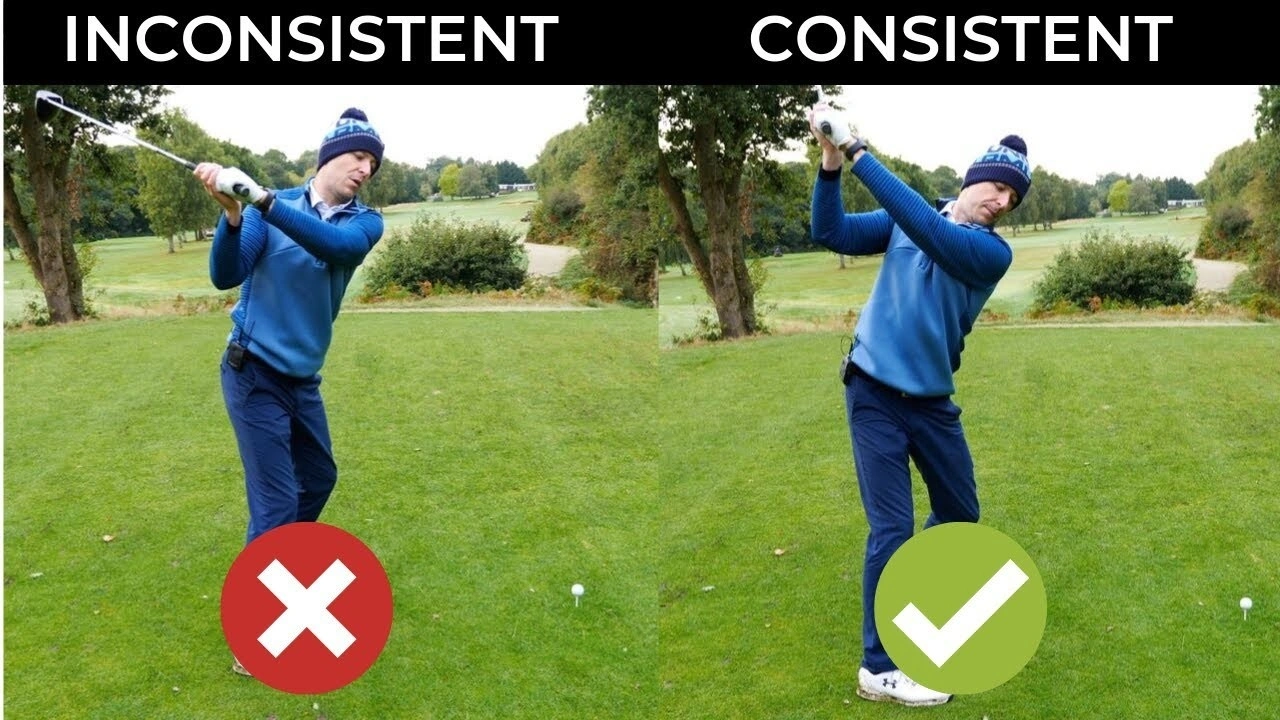
Start With a Coordinated Takeaway
The takeaway is the beginning of the backswing. A useful rehearsal is to move your arms and upper body together while allowing the club to begin its arc.
Avoid interpreting this as keeping every joint rigid. Your wrists and elbows need to participate as the swing develops.
Practise slowly enough to observe the first part of the motion. Look for an abrupt hand roll, a sudden lift, or a movement that feels disconnected from the rest of your turn.
These observations are discussion points for a coach, not diagnoses by themselves. The same visible movement can have different consequences for different golfers.
Use one simple cue, such as “start smoothly,” rather than attempting to control every body part at once.
Turn Your Upper Body Without Freezing Your Hips
From your golf posture, fold your arms across your chest and slowly turn your torso towards your trail side. Let your shoulders move with your chest and allow your hips to respond naturally. Rehearse within a range that lets you stay balanced.
Watch for two common mistakes: pulling your arms across your chest while your torso barely turns, and straining to reach a fixed shoulder angle. If you have to rise out of posture or lose balance to turn farther, shorten the motion until you can repeat it comfortably.
Maintain Comfortable Width in Your Arms
Swing width describes how the hands and club move around your body. You can explore it by keeping a comfortable sense of space between your hands and chest during slow rehearsals.
Avoid locking the lead elbow in an effort to create width. Equally, do not deliberately fold both arms simply to move the club farther behind your head.
Your trail elbow normally bends as the swing develops. How much and when depends on your movement and the coaching approach being used.
A helpful check is whether the arms and torso seem to complete their movement together. If your chest stops but your hands continue substantially farther, review the sequence before adding length.
Let the Wrists Work With the Swing
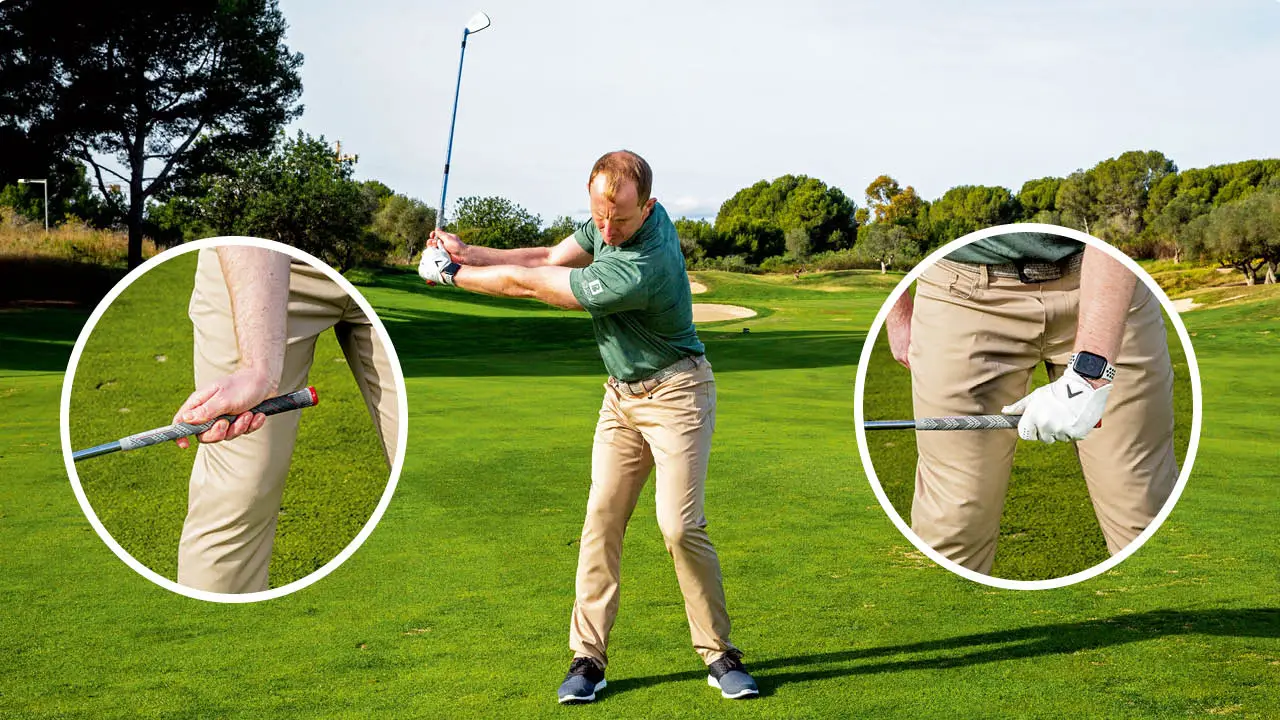
As the club moves back after the initial takeaway, Jason Baile recommends letting the wrists hinge in coordination with the arm swing and upper-body turn. Use this sequence as a reference during slow rehearsals.
- What to practise. Rehearse slowly and notice how your wrists move as your arms and chest continue turning the club back.
- Common mistake. Avoid adding extra wrist hinge just to move the club farther or forcing your wrists to match a position in a still image.
- When to ask a coach. If contact becomes less consistent after a change, ask a coach to review your grip, takeaway, and wrist movement across several swings.
Should You Make Your Backswing Longer?
Try a slightly longer backswing if you can add movement comfortably. Compare it with your usual swing using the same club and target. Extra length is worthwhile only if it helps you hit shots you can repeat.
- Contact. Check whether you strike the ball as cleanly and consistently as you do with your usual swing.
- Balance. Notice whether you can stay steady through the turn and finish without taking a step to regain your balance.
- Rhythm. Check whether you can change direction smoothly. If the extra length makes you rush from the top, return to your usual swing.
Three Practical Golf Backswing Drills
Use a clear practice area, start at an easy pace, and work on one drill at a time.
Drill 1 — Arms-crossed turning rehearsal
Goal. Feel how your torso turns and your hips respond without having to manage the club.
- Set up in a comfortable golf posture and fold your arms loosely across your chest.
- Turn your chest gently towards your trail side and let your hips respond.
- Return to address, then pick up a club and rehearse the same motion slowly.
Mistake to avoid. Forcing a larger turn by holding your hips still or rising out of posture.
Signs you’re doing it well. Your chest changes direction, your hips move comfortably, and you stay balanced throughout the turn.
Drill 2 — Rehearse, settle, and swing
Goal. Get familiar with where your backswing ends when you stay relaxed and balanced.
- Take the club back slowly to a comfortable position.
- Settle briefly at the top, then return the club to address.
- Make a relaxed practice swing, then hit a shot at an easy pace using the same feel.
Mistake to avoid. Stretching farther during the pause or carrying a forced pause into your normal swing.
Signs you’re doing it well. You can reach the same position comfortably and change direction smoothly when you hit the ball.
Drill 3 — Compare compact and fuller swings
Goal. Find out whether a slightly fuller backswing works for your game.
- Hit shots with a compact backswing, then hit shots with your usual motion. Use the same club, target, and level of effort.
- If both swings feel comfortable, try a slightly fuller backswing under the same conditions.
- Note the quality of contact and where the ball starts. Repeat the comparison in a later session to see whether the pattern holds.
Mistake to avoid. Increasing your effort with the fuller swing or judging it by a single good shot.
Signs you’re doing it well. You can compare the shot patterns at a similar pace and identify which swing length gives you the most repeatable contact and starting direction.
Use Rhythm to Connect the Motion
A backswing can look technically organized yet feel difficult to repeat if you rush the change of direction.
Practise with an easy verbal cue, such as “back and through,” while making relaxed swings. Let the words provide continuity rather than forcing an exact speed.
Smooth does not necessarily mean extremely slow. Artificially slowing the club can feel unnatural for some golfers.
If your rehearsal feels comfortable but your ball swing becomes hurried, reduce effort and return to shorter shots. Build up only while you can retain the same general rhythm.
Avoid changing tempo and backswing length aggressively in the same session.
Review Your Swing With Useful Video
Record a few typical shots, including misses. Use the same camera positions each time so you can compare one change across sessions. If you're planning practice stops during your trip, the Vietnam golf map can also help you identify courses with suitable practice facilities.
Face-on
Set the camera directly opposite the centre of your stance, with the lens just below chest height and perpendicular to the target line. Watch whether you stay balanced and how much your body shifts sideways as you turn. Keep the camera and anyone filming outside the club’s reach and clear of neighbouring hitting bays.
Down-the-line
Set the camera behind you, roughly in line with your hands at address, and aim it parallel to the target line. Frame your whole body and club so you can see how the club moves during the takeaway and where it finishes at the top. Keep the tripod clear of the swing area and the walkway behind the hitting bays.
Build a Focused Practice Session
Begin with gentle movement and short shots before testing a fuller backswing. Allow yourself time to become comfortable.
Spend the next part of the session on one rehearsal and one cue. Alternate a rehearsal with a shot so that the drill connects to an actual task.
Finish by changing targets and following your normal pre-shot routine. This checks whether the movement remains useful when your attention shifts toward playing.
Make a brief note of the cue, your typical contact, and the main miss. Those notes are more useful than relying on one memorable drive.
Before a golf holiday, keep preparation manageable. If you're looking for golf courses in Hanoi to practise before travelling, choose a convenient facility where you can work on your routine without rushing. Our Vietnam Luxury Golf Tour guide can help you think about a schedule that leaves room for practice and rest.
Common Backswing Mistakes to Avoid
Avoid chasing shaft-parallel simply because it looks like a full swing. The club’s final position is only one part of the movement.
Do not confuse a bigger lateral movement with a fuller turn. Some movement is natural, but excessive drifting can make returning to the ball harder.
Another mistake is freezing the hips while forcing the shoulders farther. Let a coach help you find a turn that suits your body.
Finally, avoid taking several technical thoughts onto the course. Practise changes beforehand, then use one familiar cue during play.
FAQ About Golf Backswing Tips
How to improve your backswing in golf?
Begin with setup, balance, and a coordinated takeaway. Record your normal swing, choose one change, and test it with comfortable-speed shots. Judge improvement by repeatable contact and direction rather than appearance alone. A coach can help identify which adjustment deserves attention first.
How can I safely make my backswing longer?
Check a recording of your usual swing first. If you want to add length, rehearse a slightly fuller turn at an easy pace and within a comfortable range. Test it with the same club and target, and keep the change only if you can maintain clean contact, balance, and rhythm.
Can a backswing be too long?
Yes. If the extra length makes you lose balance, rush the transition, or strike the ball less consistently, try a more compact backswing and compare your typical shots.
When should I ask a golf coach for help?
Ask a coach if you keep losing balance or making inconsistent contact after testing one change at a time. Bring face-on and down-the-line clips of typical shots, including misses, so the coach can assess how your setup, turn, and arm movement work together.
How to turn shoulders in golf backswing?
From a comfortable golf posture, turn your chest toward the trail side while allowing the hips to respond. Rehearse first with your arms folded across your chest. Avoid pulling only with the arms or forcing a fixed angle. Keep the motion comfortable and balanced.
Make Your Backswing Practice More Useful
The most useful golf backswing tips connect technique with observable results. Work on a balanced setup, a coordinated turn, and a manageable length, then assess what happens to your ordinary shots.
Before your trip, spend some time practising a backswing you can repeat comfortably so you have a familiar motion to rely on at an unfamiliar course. If you're visiting the golf courses in Ho Chi Minh City, maintaining a consistent practice routine can help you feel more prepared for different playing conditions. If you’re planning with Alegolf Vietnam, share your playing level, how many rounds you’d like to play, and how much practice time you’d like between rounds.
Destination

Hanoi Hanoi Golf Holidays

Ha Long Ha Long Golf Holidays

Da Lat Da Lat Golf Holidays

Nha Trang Nha Trang Golf Holidays

Da Nang Da Nang Golf Holidays

Ninh Binh Ninh Binh Golf Holidays

Ho Chi Minh Ho Chi Minh Golf Holidays

Phu Quoc Phu Quoc Golf Holidays
Golf Deal
Legend Danang Golf Resort: Course Guide & Tee TimesTopics of Many Interests
ALEGOLF TOUR AT ITE HCMC 2026 MEET US AT BOOTH 76 Things to Do in Ho Chi Minh City: Sights, Food & Golf Vietnam Golf Packages | All-Inclusive Golf Holidays & Tours Professional Golf Tour Operators: Designing the Perfect Vietnam Experience Corporate Events Golf in Vietnam | Professional Golf DMC Ultimate Guide to Planning Perfect Golf Holidays in Vietnam Dragon Golf Links - Unique Golf Course on the Sea FLC Ha Long Golf Club: Transcendent Moments Amidst a World Natural Wonder FLC Golf Links Quy Nhon - A Remarkable Golfing Destination Along the Central Coast FLC Sam Son Golf Links - A Great Destination for Golfers!New Posts



Comment